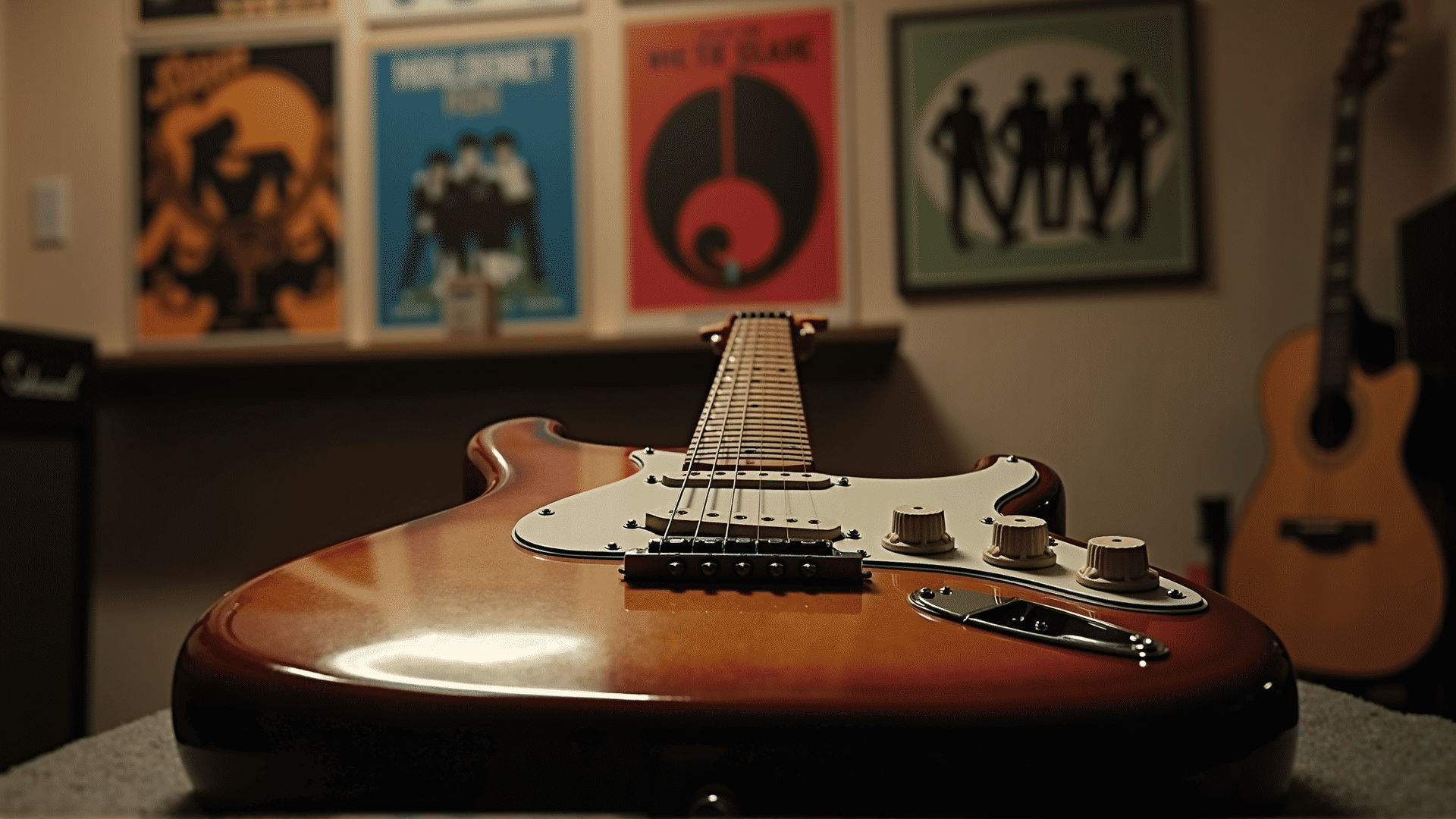
The journey of guitar sounds through the decades is a captivating story of creativity and technological innovation, transforming music as we know it. From the early days of acoustic melodies to the electrifying sounds that define rock and pop, the evolution of guitar tones has played a crucial role in the development of music genres and modern production techniques.
In the early 20th century, acoustic guitars were the staple, providing the warm and resonant sounds popular in folk and country music. The lack of amplification meant that guitarists relied heavily on their playing techniques and the natural acoustics of their instruments to produce the desired sound.
The introduction of the electric guitar in the 1930s was a revolutionary step. It allowed guitarists to break free from the limitations of volume and provided a new palette of tones to explore. This innovation was quickly embraced by jazz musicians, adding a new dimension to their performances. Charley Christian's work with the Benny Goodman Sextet in the late 1930s is often credited with pioneering the use of the electric guitar as a leading instrument.
The 1950s and 1960s marked a golden era for guitars, with the rise of rock and roll. Musicians like Chuck Berry, Buddy Holly, and later The Beatles and The Rolling Stones, pushed the electric guitar to the forefront of popular music. During this time, the development of effects pedals, like the fuzz and overdrive, allowed artists to experiment with their sound further. These innovations paved the way for more aggressive and distinctive guitar tones that defined the rock genre.
The 1970s and 1980s brought about even more creative exploration. The use of distortion, delay, and modulation effects became prevalent, giving birth to the distinct sounds of heavy metal, punk, and new wave. Guitarists such as Eddie Van Halen and Jimi Hendrix became emblematic figures, known for their innovative use of effects and groundbreaking playing techniques.
As music technology advanced, the digital era of the 1990s and 2000s offered new possibilities. The advent of digital effect processors and advanced recording technology provided guitarists with unprecedented control over their sound. Genres like grunge and alternative rock took advantage of these tools, further diversifying guitar tones.
In recent years, the rise of digital modeling and software-based effects has once again transformed guitar soundscapes. Virtual amps, effects, and even guitars can be emulated with astonishing accuracy, making it easier for musicians worldwide to access a wide variety of sounds without needing an extensive collection of gear.
Today, the evolution of guitar sounds continues to inspire and shape music production across all genres. Guitarists blend traditional techniques with modern technology to create unique sound profiles, ensuring that the guitar remains a versatile and enduring element in the world of music. As we look to the future, the ever-evolving relationship between musicians and their instruments promises to further expand the boundaries of what is possible.